The cult rite's age rule for infants and toddlers
Ofrenda a la tormentaThe cult rite's age rule for infants and toddlers was a central condition of the sacrificial system described by former cult members: a child had to be under two, and the account of one rite specifies that the victim had to be an unbaptized girl. Members justified the age limit by treating infancy as a transitional state between worlds. In the investigation, that belief connected the group’s ritual doctrine to a pattern of suspicious deaths and gave investigators a way to compare its practices with later crimes.
The Two-Year Threshold
The cult’s explanation centered on a supposed spiritual transition. Jonan Etxaide described a belief found in many cultures that children up to the age of two move between two worlds and can see and hear what happens in both. That perceived access, in the cult’s reasoning, made them suitable vehicles for communicating with spirits or seeking answers to requests. This was the group’s religious claim, not an established supernatural fact.
The account also attached the threshold to childhood development. Before the second birthday, children were said to learn instinctively through standing, walking, holding objects, and imitation. The emergence of language marked a boundary: the child’s relationship with the surrounding world changed, and the child supposedly became a less effective intermediary. Older children could still be considered attractive for witchcraft, especially before puberty, but the cult’s account treated them as less suitable for this particular purpose.
Ritual Conditions and Practice
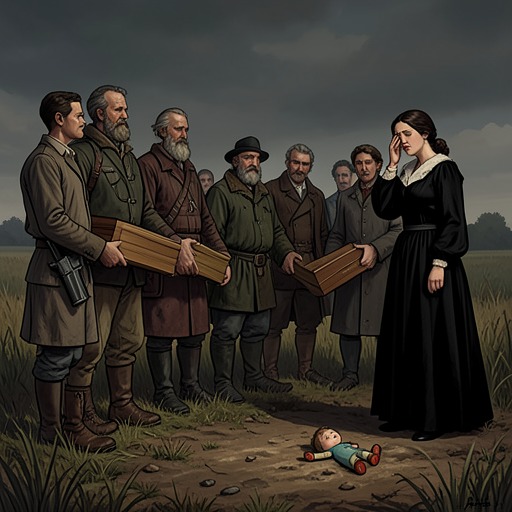
The testimony about the Lesaka group added requirements beyond age. The child had to be female and unbaptized. Baptism was understood by the cult as an offering and commitment to another god, so a baptized child was considered ineligible. The rite was also described as requiring the child to be deprived of air, in imitation of Inguma, and the body to be handed over as an offering. The witness said that parents had responsibilities within the ritual, while not claiming to know what happened to the body of the child in Lesaka.
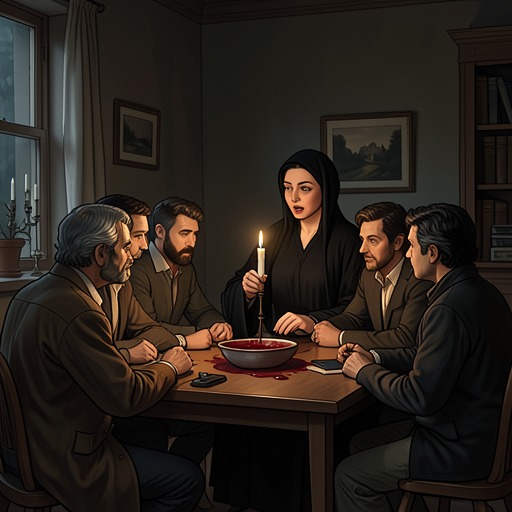
The rule worked as part of a broader scheme of repeated, patterned sacrifice. According to the witness, Inguma’s victims were taken in cycles: they had to be of the same sex and age group and die under identical circumstances until the cycle was complete. Tabese instructed members in what to do and presented animal sacrifices as offerings through which the group could obtain favors. The testimony described the escalation from those sacrifices to the killing of a child as a defining rupture in the group’s history.
From Doctrine to Investigation
Amaia Salazar used the reported doctrine to make sense of the group’s past and of suspicious infant deaths. Her account connected Rosario’s involvement in a sectarian group active in Baztán from the 1970s into the early 1980s with a circle that had discussed sacrifices of newborns or very young children. She also described the death of her twin sister and three other cases involving children under two who died in their sleep. The deaths had initially been classified as sudden infant deaths after routine examinations; the parents’ conduct had nevertheless prompted concern from social services. Amaia identified the families’ shared connection to the group and to the wealthy Pamplona lawyers whose daughter was also said to have died before the age of two.
That daughter’s alleged death abroad lacked the supporting records the account would lead investigators to expect: no death certificate, hospital record, or trace of the claimed journey. A witness had also placed Doctor Berasategui and his car at the property, a connection the owners acknowledged while refusing to explain their relationship with him. These details did not by themselves prove that the age rule had been applied in every case, but they made the doctrine relevant to a widening investigation rather than merely an account of past belief.
Recurrence and Narrative Significance
The rule later returned when Amaia reconsidered the Basajaun murders. Those victims were girls older than the infants covered by the cult’s strict under-two condition, so the cases were not presented as literal repetitions of that rule. Instead, the testimony about children’s transitional status helped her interpret the killer’s imagery of a return to childhood and purity: the bodies were arranged as offerings, and the investigation linked the ritualized treatment of young victims to the cult’s language of sacrifice. The distinction between a formal age requirement and a broader symbolic use of childhood keeps the connection suggestive without making the cases identical.
The rule also exposes how the group converted vulnerability into doctrine. Tabese supplied members with an explanation for why a child’s age, sex, baptismal status, and manner of death mattered, while presenting sacrifice as a means to obtain power. The belief’s force in the story lies not in proof of its supernatural premises, but in the way those premises organized conduct, bound members to the group, and gave Amaia a framework for investigating deaths that had once seemed unrelated.